

Human rights groups yesterday staged a demonstration in front of the headquarters of Ve Wong Corp — a well-known food manufacturer that produces instant noodles, sauces and snacks — in Taipei, protesting against the alleged seizure of farmland in Cambodia by two of the company’s joint ventures.
“The forced seizure of farmland in Cambodia’s Koh Kong Province by Koh Kong Sugar Co Ltd and Koh Kong Plantation Co Ltd is a very well-known case among human rights activists in Southeast Asia,” said Roxanna Chen (陳思穎), a protester who used to work at a human rights organization based in Thailand. “After looking deeper into the case, I realized that a Taiwanese firm was one of the major investors in the two companies and that’s why I think we should take some actions here in Taiwan.”
According to Chen, Ve Wong owns a 30 percent stake in each of the companies operating in Cambodia, with the remainder of both fims owned by the Thailand-based Khon Kaen Sugar Co and Cambodian member of parliament, Ly Yong Phat.

Photo: Chu Pei-hsiung, Taipei Times
Since 2006, Koh Kong Sugar has seized 9,600 hectares of farmland and Koh Kong Plantation took 9,400 hectares to build a sugarcane plantation and a sugar processing plant, Chen said.
Several Cambodian farmers were killed or injured by security personnel dispatched by the companies as they tried to protest the seizure of their farmland, she added.
“I don’t know the law, but I want to say that it’s fine for Ve Wong to make money, but they have no right to do so by hurting others and depriving farmers of their rights,” said Ly Vouch Hang, a Cambodian immigrant who represented the TransAsia Sisters Association Taiwan at the protest.
Taiwan Association for Human Rights’ Policy director Shih Yi-hsiang (施逸翔) said that as a signatory of the UN’s International Covenant on Civil and Political Rights and its International Covenant on Economic, Cultural, and Social Rights, “the government should make sure that all businesses follow the principles laid out in the two covenants, whether operating in Taiwan or abroad.”
In response to the protest, Ve Wong Corp issued a statement saying that while the company holds a 30 percent stake in each of the companies, “our Thai partners are in charge of the daily operations of the companies and have never informed us about what the human rights groups have stated.”
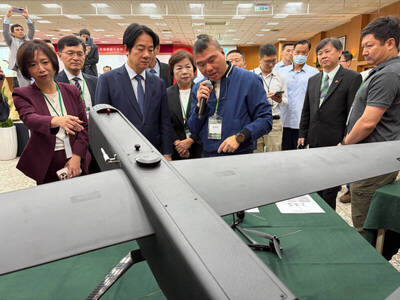
Two executives of drone supplier Jiin Ming Industry Co (錦明實業) have been detained and held incommunicado over the company's alleged use of prohibited China-made chips and camera lenses in drones supplied under recent military contracts, the Taoyuan District Prosecutors' Office said today. In a statement, prosecutors said they raided the offices of Jiin Ming — headquartered in Taoyuan — as well as those of its subsidiaries and its suppliers on Thursday last week. The raids followed a report that the company had breached its procurement contracts by putting the prohibited components into drones delivered to the military. During the raids, prosecutors summoned
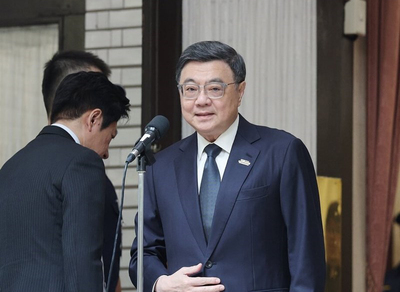
The government would continue monitoring online rumors that a pneumonic plague outbreak has spread from Russia into China and could enhance existing quarantine measures, Premier Cho Jung-tai (卓榮泰) said today. During a legislative meeting, Democratic Progressive Party Legislator Wang Ting-yu (王定宇) said rumors were circulating that the disease had spread across several Chinese provinces. He asked Cho whether the government was prepared to prevent the disease from spreading to Taiwan, given the frequent exchanges between Taiwan and China, and how concerned the government was about the alleged outbreak. The Ministry of Health and Welfare implemented border quarantine measures after briefing the Executive Yuan

South Korean boy band BigBang drew 120,000 fans to three concerts at Taipei Dome from Friday through yesterday, as the band thanked them for their support over their 20-year career. The Taipei Dome concerts were part of BigBang's "2026-2027 World Tour XX: Cosmos." Friday's concert was BigBang's first performance in Taiwan in 11 years. During the encore, group leader G-Dragon (GD) shouted "I love you" in Chinese and said he was especially happy to perform in Taiwan with bandmates Taeyang and Daesung. "Taipei, I'm very grateful to you all," GD said in Chinese, asking fans to wait for the band's return. Daesung thanked
A Chinese People's Liberation Army (PLA) Navy aircraft carrier group was being monitored after entering the western Pacific, the Ministry of National Defense said today, after Beijing yesterday criticized Taiwan for using a water cannon against a Chinese fishing boat near the Pratas Islands (Dongsha Islands, 東沙群島). A Chinese naval task group led by the aircraft carrier Liaoning (遼寧) yesterday sailed to the western Pacific for training, Chinese state-run Xinhua news agency quoted the PLA Navy as saying. “The drill is part of the annual routine training plan aimed at testing and improving the troops’ combat readiness and enhancing their ability to


 RSS
RSS